
How Early Childhood Education Supports Child Development
September 7, 2026
Key Differences between Elementary School and Primary School – 2026 Edition
September 14, 2026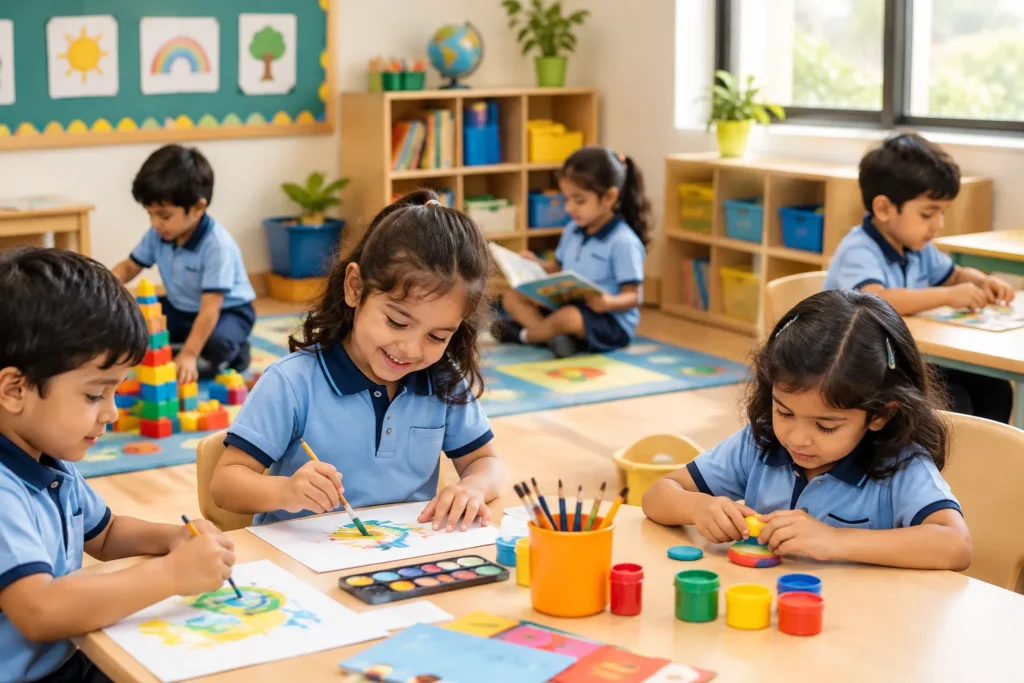
Importance of Preschool Education in Early Childhood Development
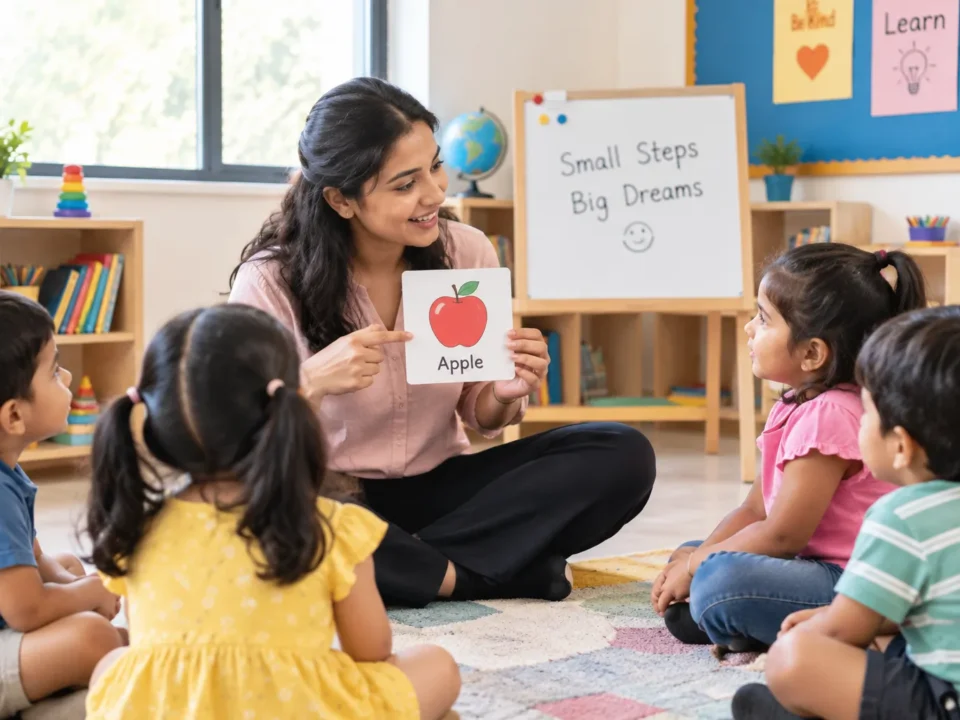
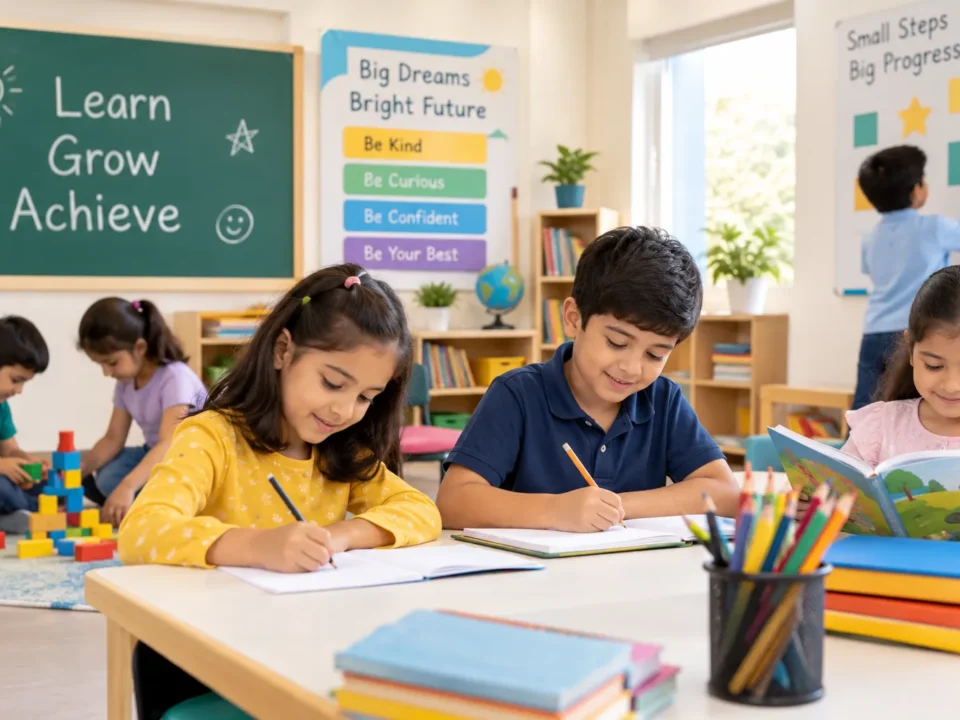
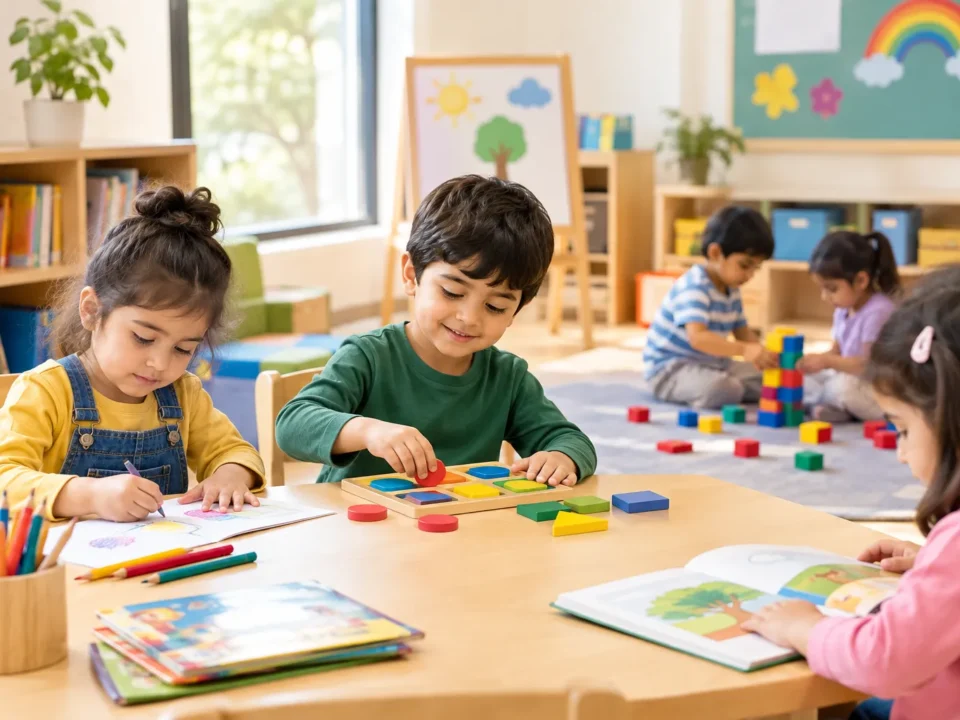
Walk into a good preschool classroom and you may see children painting, listening to a story, counting objects, building towers, singing, negotiating over a toy, or asking an endless stream of questions. To an adult, it can look like play. In a thoughtfully planned programme, these moments are also learning experiences.
That is where the importance of preschool curriculum becomes clear. A curriculum gives educators a purposeful framework for deciding what children should experience, how those experiences should be introduced, and how learning can build gradually over time.
This does not mean turning preschool into a smaller version of primary school. Young children need movement, conversation, repetition, exploration, relationships and opportunities to make choices.
The National Association for the Education of Young Children (NAEYC) describes developmentally appropriate practice as a strengths-based, play-based approach that supports children across developmental domains. Its curriculum guidance also emphasises meaningful goals, flexibility and learning through play.
In India, the National Curriculum Framework for Foundational Stage 2022 (NCF-FS) positions preschool within the five-year Foundational Stage (ages 3-8) and supports flexible, play-based, activity-based and inquiry-based learning.
So, what makes a preschool curriculum worthy? It ties routine activities to developmental goals without sucking the fun out of childhood. It helps children to develop language, confidence, early mathematical thinking, physical co-ordination, self-regulation, creativity and social understanding and helps teachers to see what each child needs next.
What Is a Preschool Curriculum?
A preschool curriculum is more than a list of subjects or a timetable pinned to a classroom wall. It is the planned framework of learning experiences, goals, teaching approaches, materials and observations used to support young children’s development.
The NAEYC curriculum guidance describes curriculum as plans for learning experiences through which children acquire knowledge, skills, abilities and understanding. It also stresses that a written curriculum can provide consistency while still allowing educators to respond to children’s interests and experiences.
A quality preschool curriculum answers practical questions: What should children be exploring? Which skills are developing? What experiences will help them practise those skills? How can teachers extend a child’s thinking? What evidence will show progress?
It should also reflect the children themselves. Their home languages, family experiences, interests, cultures and abilities can all become meaningful starting points for learning.
Why Is a Preschool Curriculum Important?
The importance of preschool curriculum is not simply about academic preparation. Its deeper purpose is to create a coherent environment in which different areas of development strengthen one another.
Research reviewed by the National Academies of Sciences, Engineering, and Medicine identifies curriculum as an important component of preschool quality. Its 2024 report, A New Vision for High-Quality Preschool Curriculum, notes that curriculum interacts with classroom processes, teaching quality, learning environments and support for educators.
Children do not develop in isolated boxes. A child listening to a story is practising attention and language. A child building with blocks is exploring space, balance, planning and problem-solving. A group game can involve movement, counting, communication, turn-taking and emotional regulation at the same time.
1. Builds a Strong Foundation for Future Learning
Preschool is an important bridge from the home environment to the more formal environment of school. Children begin to develop habits that will support their learning later on: listening, asking questions, sharing an idea, following a sequence, persevering with a task and trying again after a mistake.
The curriculum assists these foundations to be developed by design and not by accident. Activities can be planned so children encounter ideas several times, each time with a bit more sophistication.
The National Research Council’s research on early childhood development and learning indicated that well-designed early childhood programmes with specified and integrated curriculum goals are better able to prepare children to enter formal schooling.
The aim is not to get every child reading early or finishing worksheets quickly. Its goal is to build foundational skills that will help children become confident, capable learners.
2. Supports Cognitive Development
Young children are natural investigators. They notice patterns, test ideas, compare objects, ask why something happened and change their approach when the first attempt does not work.
A thoughtful curriculum gives this curiosity direction. Sorting objects, predicting which items will float, matching shapes, sequencing picture cards or building a bridge for toy animals can develop cognitive skills without feeling like formal lessons.
The National Research Council highlights the value of building on children’s existing understanding and encouraging them to predict, question, reflect and investigate. These habits support deeper learning later.
This is one reason the importance of preschool curriculum extends beyond what a child can memorise. It is about helping children learn how to think.
3. Develops Communication and Early Language Skills
Language grows through interaction. Children need adults who listen, respond, introduce new words, ask meaningful questions and give them time to express themselves.
A curriculum can deliberately create these opportunities through storytelling, songs, rhymes, picture discussions, role play, puppet shows, conversations and interactive reading.
The Education Endowment Foundation’s evidence summary on communication and language approaches reports positive effects from approaches that intentionally develop vocabulary, language, verbal interaction and social communication in the early years.
For a preschooler, learning a new word is only the beginning. Using it in a conversation, story or pretend-play situation gives it meaning. A strong curriculum creates many such opportunities throughout the day.
4. Strengthens Social and Emotional Development
One of the first times children often regularly socialise with a larger group of peers is in preschool. They discover that other children have different thoughts, feelings, likes and ways of doing things.
A curriculum can be deliberately designed to develop turn taking, cooperation, empathy, conflict resolution, sharing, independence and emotional expression. Group stories, partner activities, collaborative construction and role play can be practice grounds for social skills.
Responsive relationships and back-and-forth interactions with caring adults help build foundations for language, social skills and healthy development, the Harvard University Center on the Developing Child says.
Relationships should not sit outside the curriculum. They are part of how the curriculum works. A warm teacher who notices a child’s attempt, responds to a question and helps put feelings into words is supporting learning in real time.
5. Encourages Learning Through Play
Play is not the opposite of learning. For young children, it is one of the main ways learning happens.
UNICEF notes that play, exploration and hands-on learning are at the core of effective preschool programmes. It emphasises that young children acquire important knowledge and abilities through play.
The scope of research on play-based learning in early childhood education is captured in the 2026 scoping review of play-based learning published in the Early Childhood Education Journal.
The NCF-FS describes a continuum from child-directed play, to teacher-supported guided play, to teacher-planned structured play. Balance is important. Children need freedom to explore but they also benefit from educators deliberately introducing materials, questions and challenges that extend thinking.
6. Develops Early Numeracy Without Making Learning Mechanical
Children encounter mathematics long before a formal maths lesson. They count steps, compare who has more blocks, notice shapes, arrange objects, recognise patterns and estimate whether something will fit.
A good curriculum turns these everyday experiences into intentional learning opportunities. Sorting leaves, sharing snacks equally, measuring water, building with blocks and clapping rhythmic patterns can all introduce mathematical concepts.
This approach reduces the risk of making early numeracy feel like memorisation. Children understand ideas more deeply when numbers and quantities are connected to things they can touch, move, see and discuss.
7. Builds Fine and Gross Motor Skills
Physical development is an essential part of early learning. Children need opportunities to run, jump, balance, climb, carry, manipulate objects and coordinate their movements.
Fine motor activities such as drawing, tearing paper, threading, moulding clay, using child-safe tools and building with small objects strengthen control needed for later classroom tasks.
NCERT recognises physical and motor development as a core part of the Foundational Stage and highlights learning through the senses and whole-body engagement.
A curriculum that makes space for movement therefore supports both physical wellbeing and learning readiness.
8. Encourages Creativity and Self-Expression
There is rarely only one correct way for a preschool child to paint a picture, construct a model, tell a story or move to music. Creative activities give children space to make choices and communicate ideas.
Art, music, drama, dance, puppetry and imaginative play can strengthen expression while also supporting language, coordination, attention and confidence.
The NCF-FS includes visual arts, craft, drama, puppetry, music and movement among experiences that can form part of foundational learning.
A child who proudly explains why their drawing has three suns is practising communication and symbolic thinking. The adult’s job is not to correct the picture into something more realistic, but to listen, ask questions and extend thinking.
9. Supports Self-Regulation and Independence
One of the biggest changes during preschool is that children gradually become better at managing attention, behaviour and emotions. They still need significant adult support, but everyday routines provide valuable practice.
A predictable sequence can help children understand what happens next. Simple classroom responsibilities can build independence. Games involving stopping, waiting, remembering rules or changing actions can strengthen self-control.
The Education Endowment Foundation reports positive associations between self-regulation approaches and learning, including early reading, mathematics and problem-solving.
A curriculum should not only ask what children know. It should also create opportunities for children to practise managing themselves while learning.
10. Makes Learning More Inclusive and Responsive
Children arrive at preschool with different languages, experiences, strengths, interests and developmental needs. Treating every child as though they learn in exactly the same way can make a curriculum less effective.
Developmentally appropriate planning allows teachers to adjust materials, questions, grouping, pace and support. NAEYC highlights knowledge of child development, the individuality of each child and the context in which development occurs.
The National Academies’ 2024 report stresses cultural and linguistic appropriateness, inclusive environments and the importance of recognising children’s diverse lived experiences.
Consistency does not mean rigidity. A curriculum should provide direction while leaving enough room for teachers to respond to the children actually in front of them.
What Should a Good Preschool Curriculum Include?
There is no single universal curriculum that is automatically best for every child, school or community. However, strong programmes tend to share certain characteristics.
A useful curriculum balances language and communication, early mathematics, social-emotional learning, physical development, creative expression, exploration and approaches to learning.
NAEYC recommends a planned curriculum that supports meaningful goals while remaining culturally and linguistically responsive. It also cautions against rigid, narrowly defined, highly scripted curricula that leave little room for individual interests.
The OECD’s Starting Strong VI report highlights curriculum frameworks that support multiple areas of development, including cognitive and socio-emotional development and wellbeing.
| Curriculum area | What it supports | Example |
| Language | Vocabulary, listening, expression | Storytelling and interactive reading |
| Early mathematics | Number sense, patterns, reasoning | Sorting, counting and measuring |
| Social-emotional learning | Empathy, cooperation, self-regulation | Turn-taking games |
| Physical development | Coordination and motor control | Outdoor movement and fine-motor play |
| Creativity | Imagination and self-expression | Art, music, drama and puppetry |
| Inquiry | Curiosity and problem-solving | Simple experiments and nature walks |
How Play-Based Curriculum Supports School Readiness
School readiness is often misunderstood as knowing a certain number of letters or numbers before primary school. In reality, readiness is broader.
Children benefit from being able to listen, communicate needs, participate in a group, manage routines, solve age-appropriate problems, handle transitions and approach unfamiliar activities with curiosity.
UNICEF India connects quality early childhood education with school readiness and highlights learning through play and supportive transitions into early grades.
A play-based curriculum can therefore prepare children for school without turning preschool into an academic race. Building a tower with a friend may involve planning, communication, balance, persistence and negotiation.
The Role of Teachers in Bringing the Curriculum to Life
A written curriculum cannot teach children by itself. The quality of implementation matters enormously.
Teachers observe what children are doing, listen to their questions, decide when to step in and choose when to let children explore independently. They may introduce a new word, add another block to a construction challenge or ask a question that encourages a child to explain their thinking.
NAEYC’s guidance on teaching describes intentional teaching as a blend of child choice and educator planning, grounded in caring relationships and responsive practice.
NCF-FS guidance on teacher professional development emphasises preparation connected to child development, play, discovery, curriculum goals and classroom practice.
Why a Written Curriculum Still Matters
Some people assume that play-based learning means teachers can simply provide toys and let the day unfold. That is not what high-quality early learning looks like.
A written curriculum gives educators a shared map. It helps ensure important developmental areas are not repeatedly overlooked and that experiences build logically over time.
At the same time, NAEYC’s curriculum position stresses flexibility. A strong model is neither completely unplanned nor excessively scripted. It is intentional, flexible and responsive.
How Parents Can Evaluate a Preschool Curriculum
Parents do not need to be curriculum specialists to ask useful questions. A short conversation with the school can reveal a great deal about how learning is planned.
Ask what developmental goals guide the programme, how much time is given to play and outdoor activity, how teachers support language and early mathematics, and how activities are adapted for children at different stages.
Ask how the school respects home languages and family backgrounds, how teachers observe progress, and how the transition to the next stage of schooling is supported.
One useful clue is to ask a teacher to describe a typical activity and what children learn from it. A strong answer will connect the activity to several developmental goals rather than focusing only on worksheet completion.
Common Mistakes in Preschool Curriculum Design
Treating preschool like primary school
Young children need a different balance of movement, play, conversation and hands-on experiences. Excessive worksheets and long periods of passive sitting can work against that.
Focusing only on academic skills
Letters and numbers matter, but so do language, relationships, physical development, creativity, confidence and self-regulation.
Using a rigid one-size-fits-all sequence
Children develop at different rates. The curriculum should allow educators to adapt experiences to children and settings.
Confusing activity with learning
A classroom can be busy without being purposeful. The question is whether experiences have meaningful goals and whether teachers help children make connections.
Forgetting relationships
Children learn through interaction with responsive adults and peers. A curriculum should create time for conversation, shared attention, encouragement and emotional support.
Preschool Curriculum in the Indian Context
India’s approach to foundational learning has increasingly placed early childhood at the centre of educational planning. The National Education Policy 2020 identifies early childhood care and education as a critical stage and envisions play-based, activity-based and inquiry-based learning.
The NCF-FS 2022 defines the Foundational Stage as ages 3 to 8, covering three years of preschool followed by Grades 1 and 2. It identifies physical and motor, cognitive, socio-emotional-ethical, cultural and artistic development, along with communication, early language, literacy and numeracy, as important areas.
This reinforces a holistic view of early learning. Preschool is not simply a waiting room before Class 1. It is part of the foundation on which later schooling is built.
The framework also recognises the importance of concrete experiences, sensory learning, interaction and developmentally and culturally appropriate materials.
What the Research Says About Quality
Research does not support the idea that buying a particular curriculum package automatically guarantees better outcomes. Curriculum is one part of a larger system.
The National Academies notes that curriculum effectiveness depends on factors including the setting, educators, children, implementation and the outcomes being measured. There may not be a one-size-fits-all approach.
The National Research Council review found that cognitive, social-emotional and motor development are complementary areas requiring attention in preschool.
This changes the question for educators. Instead of asking which curriculum is most famous, ask which curriculum is developmentally appropriate, evidence-informed, culturally responsive and realistic for the children and teachers using it.
A Simple Test for a High-Quality Preschool Curriculum
- Purposeful: learning experiences have clear developmental goals.
- Playful: children learn through play, exploration and active participation.
- Progressive: experiences build on what children have already encountered.
- Responsive: teachers adapt to children’s interests, abilities, languages and needs.
- Holistic: cognitive, language, social-emotional, physical and creative development are all valued.
If these qualities are visible in everyday classroom practice, the curriculum is doing something valuable. If a programme talks extensively about academic results but gives children little time to talk, move, explore, create or interact, it is worth asking whether the balance is right.
Frequently Asked Questions
Why is a preschool curriculum important?
The importance of preschool curriculum lies in giving young children purposeful, developmentally appropriate learning experiences. It supports language, early numeracy, cognitive development, social-emotional skills, physical development, creativity and school readiness.
What should a preschool curriculum focus on?
It should support the whole child. Key areas include communication and language, early mathematical thinking, social and emotional development, physical and motor skills, creativity, exploration, problem-solving and positive approaches to learning.
Is play-based learning effective in preschool?
Play is a central way young children explore, practise skills and understand their world. Effective play-based programmes combine child choice and exploration with thoughtful teacher guidance and intentional learning goals.
How does preschool curriculum support school readiness?
It develops more than academic knowledge. Children practise communication, attention, cooperation, self-regulation, independence, problem-solving and confidence, all of which help them participate successfully in formal schooling.
Should every preschool follow the same curriculum?
No single curriculum is automatically best for every setting. A strong framework should be developmentally appropriate and evidence-informed while allowing educators to adapt experiences to children’s needs, interests, languages and local context.
How can parents know whether a preschool curriculum is good?
Ask how the school balances play with intentional teaching, how it supports different developmental areas, how teachers observe progress and how activities are adapted for individual children. It is also useful to observe whether children appear engaged, supported and actively involved in learning.
Conclusion
The importance of preschool curriculum goes far beyond preparing a child to recognise letters or count before primary school. A thoughtfully designed curriculum gives children something more valuable: a strong foundation for becoming curious, confident and capable learners.
When language, early mathematics, movement, creativity, social interaction and exploration are woven into everyday experiences, children learn in ways that feel natural to them. Play becomes purposeful without losing its joy, and teaching becomes intentional without becoming rigid.
NAEYC UNICEF, WHO and India’s NCERT all place emphasis, in different ways, on responsive relationships, developmentally appropriate learning, play and the wider wellbeing of the child.
For parents choosing a preschool and educators shaping a programme, the best question is not simply, ‘What will children learn?’ It is, ‘What kind of learner will this environment help each child become?’ A good preschool curriculum answers that through purposeful experiences, caring relationships and plenty of room for children to explore, wonder and grow.