
Good Study Habits for Kids: Build Early Learning Skills
March 30, 2026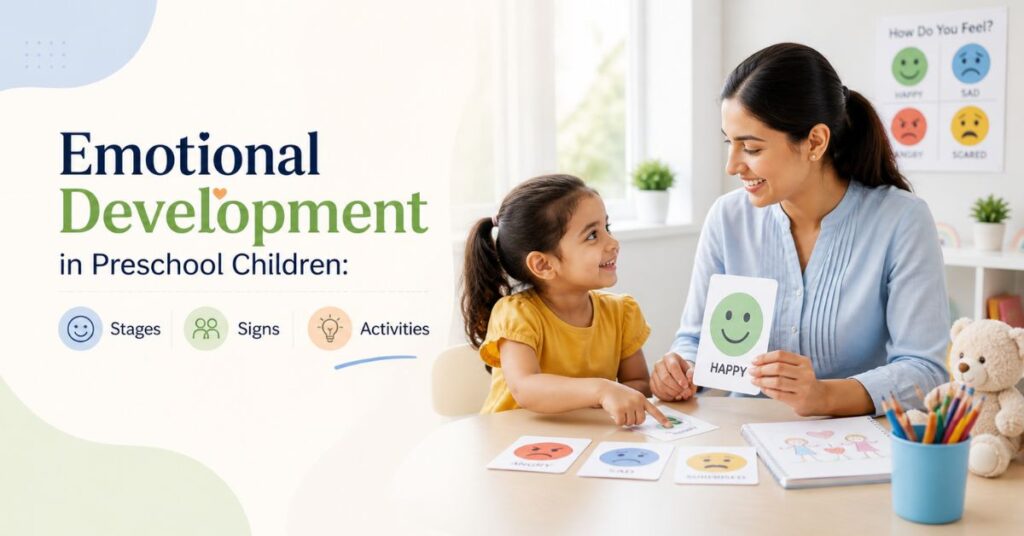
Emotional Development in Preschool Children: Stages, Signs & Activities
As important as learning about letters and numbers, emotional development in preschool children is equally important. They must learn how to express joy, show excitement, handle frustration, overcome fear, etc.
Their early childhood is the most impressionable phase of life; hence, it’s the perfect time to ensure emotional development in preschool children. When they are guided to recognise and express their emotions in healthy ways, they grow up to be confident, empathetic, and emotionally balanced individuals.
So, let’s explore the stages of emotional growth, signs to look for, and practical activities that support healthy emotional development in preschool children.
What is Early Childhood Emotional Development?
Early childhood emotional development refers to how children learn to identify, express, and manage their emotions. It also includes understanding the feelings of others and developing empathy. During preschool years, children begin to:
- Recognise basic emotions like happiness, sadness, anger, and fear
- Express their feelings through words, actions, and facial expressions
- Build relationships with classmates and adults
- Learn how to respond to different social situations
Thus, strong early childhood emotional development helps children feel secure, build confidence, and interact positively with the world around them.
Emotional Development Stages in Early Childhood
This section will help parents and teachers understand the different emotional development stages in early childhood:
Ages 2-3: Recognising & Expressing Emotions
At this stage, children begin to identify basic emotions. However, they may still struggle to control them. That’s why tantrums are quite common during this period because children are still learning how to express frustration or disappointment. They often:
- Show strong attachment to caregivers
- Express emotions openly through crying or laughter
- Begin using simple words to describe feelings
Hence, this stage is the perfect start for teaching emotions to preschoolers in simple and relatable ways.
Ages 3-4: Developing Awareness & Social Interaction
Between the ages of 3 and 4, children become more aware of their emotions and start noticing how others feel. They begin to engage in playing with others and learn basic sharing and cooperation skills. They often:
- Show empathy in simple ways (comforting a friend)
- Start understanding rules and boundaries
- Express a wider range of emotions
Hence, this phase supports the emotional growth in children by encouraging interaction and communication.
Ages 4-5: Managing Emotions & Building Relationships
By this stage, children begin to regulate their emotions better and respond more appropriately in social situations. They often:
- Use words instead of actions to express feelings
- Develop friendships and teamwork skills
- Show improved patience and self-control
These abilities contribute to stronger emotional skills for preschoolers, preparing them for school and social environments.
Signs of Healthy Emotional Development
Every child develops at their own pace, but certain signs can indicate healthy emotional development in preschool children.
1: Positive Expression of Emotions
Children are able to express feelings like happiness, sadness, or anger without excessive frustration. They may still experience emotional outbursts, but they gradually learn to communicate their feelings.
2: Ability to Form Relationships
Children start building friendships, enjoy group activities, and feel comfortable interacting with their classmates and even adults.
3: Developing Empathy
A key aspect of emotional intelligence for kids is empathy. Children begin to understand how others feel and may try to comfort someone who is upset.
4: Improving Self-Control
Children gradually learn to wait, take turns, and manage small disappointments without extreme reactions. This shows progress in helping kids manage emotions effectively.
Social-Emotional Learning Activities for Preschoolers
Children can be encouraged to participate in social-emotional learning activities, such as:
1: Emotion Identification Games
Parents and teachers can use flashcards, pictures, or facial expressions to help children identify different emotions.
They must be asked questions like “How do you think this person feels?” to encourage discussion. This simple activity is great for teaching emotions to preschoolers in an engaging way.
2: Storytelling & Role Play
Stories are powerful tools for emotional learning. Reading or acting out situations helps Children will understand different feelings and responses much better when they read stories or act out situations.
Even role-playing everyday situations also helps children practice emotional skills for preschoolers, such as sharing, helping, and expressing feelings.
3: Art & Creative Expression
Sometimes children don’t have the right words to express their emotions. But drawing, painting, and crafting can be suitable media. These creative activities are excellent SEL activities for preschool kids because they encourage self-expression and emotional release.
4: Breathing & Calm-Down Techniques
Simple breathing exercises can help children calm down during emotional moments. That’s why children are taught to pause, take deep breaths, and relax. These are effective ways of helping kids manage emotions.
5: Group Activities & Play
Group games teach cooperation, patience, and empathy. Activities like building something together or playing team games help children understand teamwork and emotional responses.
These are essential social-emotional learning activities that build communication and relationship skills.
How Parents & Educators Can Support Emotional Development
Patience, understanding, and consistent guidance are compulsory while helping kids manage emotions. Here are some other ways as well:
1: Encourage Open Communication
You must create a safe space where children can feel comfortable expressing their emotions without the fear of judgement.
2: Be a Role Model
Children basically learn by observing adults. That’s why it’s recommended to demonstrate calm behaviour, empathy, and positive communication to encourage children to develop similar habits.
3: Validate Their Feelings
Instead of dismissing emotions, you need to acknowledge them. For example, saying “I understand you’re upset” helps children feel heard and supported.
4: Set Consistent Boundaries
Clear and consistent rules help children understand acceptable behaviour while still giving them the space to express their emotions.
5: Practice Daily Emotional Learning
Small daily practices such as discussing feelings, reading stories, or engaging in SEL activities for preschool kids can reinforce emotional learning naturally.
Final Summary
Thus, emotional development in preschool children shapes how children express themselves, build relationships, and handle challenges in life.
Hence, parents and teachers can create a strong emotional foundation by understanding emotional development stages in early childhood, recognising signs of healthy emotional growth, and engaging children in meaningful social-emotional learning activities.
However, this is not a one-time effort. It is a continuous process that grows with guidance, patience, and everyday experiences.
If you are looking for the top preschool in Greater Noida that focuses on holistic development, including emotional well-being and social learning, JBM Smart Start offers an opportunity for your children to grow emotionally, socially, and academically. Contact today and enrol your child!
Frequently Asked Questions
1: What is emotional development in preschool children?
Emotional development in preschool children refers to how they learn to understand, express, and manage their emotions while also recognising the feelings of others.
2: What are the key emotional development stages in early childhood?
The key emotional development stages in early childhood include recognising emotions (ages 2-3), developing emotional awareness (ages 3-4), and managing emotions with better control (ages 4-5).
3: Why is emotional intelligence for kids important?
Emotional intelligence for kids helps them build relationships, manage stress, communicate effectively, and develop empathy.
4: What are some effective social-emotional learning activities?
Some effective SEL activities for preschool kids include storytelling, role play, art, group games, and emotion identification exercises.
5: How can parents support emotional growth in children?
Parents can support emotional growth in children by encouraging open communication, validating feelings, setting boundaries, and engaging children in daily emotional learning activities.