
Emotional Development in Preschool Children: Stages & Activities
March 31, 2026
How Early Childhood Education Supports Child Development
September 7, 2026
What is Elementary School
If you have ever typed what is elementary school into a search bar, you are probably a parent trying to plan the next few years of your child’s education. It is a fair question, because the phrase means slightly different things in different countries, and Indian parents often hear several terms used side by side.
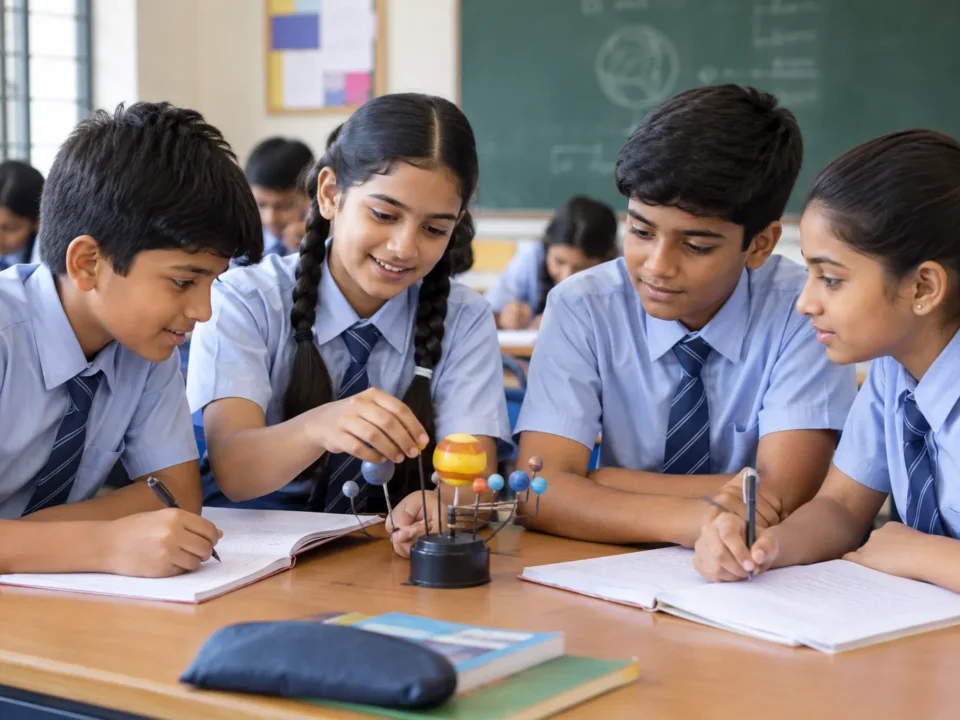
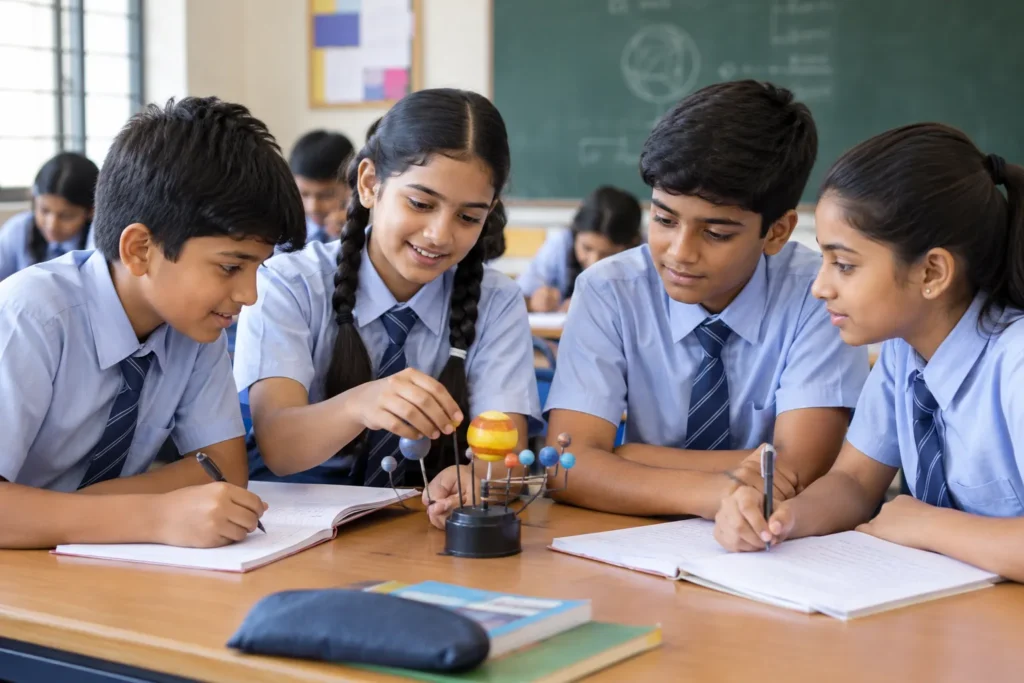
In the simplest sense, an elementary school is the first stage of formal education a child attends after preschool or kindergarten. It is where children learn to read fluently, work with numbers, and build the habit of sitting, listening, and cooperating with classmates.
This guide explains what elementary school actually means, in India, how many years it lasts, which classes fall under it, what children study, and how the National Education Policy 2020 has reshaped this stage. Short sections and a simple table make it easy to save and revisit later
Quick answer:
An elementary school, also called a primary school in India, covers the early years of formal education, generally from Class 1 to Class 8, for children aged roughly 6 to 14 years. It builds foundational literacy, numeracy, and life skills before a child moves on to secondary school.
What Does Elementary School Mean in India?
The phrase elementary school is common in North America, while Indian parents, teachers, and government documents usually say primary school or elementary education. Both describe the same stage of learning, so there is no need to worry about picking the “correct” term.
Under Indian law, elementary education is treated as one continuous stage running from Class 1 to Class 8. The Right to Education Act, 2009 defines this stage clearly and makes it a legal entitlement for every child between six and fourteen years of age.
Within this eight-year stage, schools generally recognise two smaller phases: lower primary, from Class 1 to Class 5, and upper primary or middle school, from Class 6 to Class 8. Many people use “elementary” and “primary” for the first phase alone, which is where the confusion usually begins.
It also helps to remember that elementary school is not a separate type of institution in India the way it is in some other countries. Most schools simply run pre-primary, elementary, and secondary sections under one roof, one management, and one campus.
This means a child can often stay at the same school from nursery right through Class 12, moving between sections as they grow older, rather than switching campuses at every stage as happens in some other education systems.
Age Group, Classes and Duration of Elementary School
Understanding the exact age group and classes involved makes it much easier to plan admissions, transfers, and school selection. The table below breaks down each stage of elementary school in India in one glance.
| Stage | Classes | Typical Age | Duration |
|---|---|---|---|
| Lower Primary | Class 1 to Class 5 | 6 to 11 years | 5 years |
| Upper Primary (Middle) | Class 6 to Class 8 | 11 to 14 years | 3 years |
| Full Elementary Stage | Class 1 to Class 8 | 6 to 14 years | 8 years |
As the table shows, the full elementary education stage spans eight years. Children usually begin Class 1 around the age of six, after completing two or three years of pre-primary or kindergarten schooling.
Some states and school boards allow slightly earlier or later admission ages depending on local rules, so it is worth checking the specific cut-off date used by a school before applying, since these dates can vary by a few months from one state to another.
Age proof and admission documents are usually verified at the time of enrolment, and most schools follow guidelines issued by their respective state education department when deciding the minimum entry age for Class 1.
Elementary School Under the National Education Policy 2020
The National Education Policy (NEP) 2020 replaced the older 10+2 structure with a new 5+3+3+4 model of schooling. This change affects how people describe elementary school, so it is worth understanding before you compare schools or curricula.
Under this model, the Foundational Stage covers three years of pre-school plus Class 1 and Class 2, for children aged three to eight. The Preparatory Stage covers Class 3 to Class 5, and the Middle Stage covers Class 6 to Class 8, together spanning ages eight to fourteen.
In everyday language, most parents and schools still use elementary school to mean Class 1 through Class 8, matching the older definition used in the Right to Education Act. The NEP mainly reorganises how teaching is structured within that stage, rather than changing the age range itself.
The policy places strong emphasis on foundational literacy and numeracy, activity-based learning, and teaching in the child’s home language wherever practical during the early years of elementary education.
Another notable change is the shift away from heavy, exam-focused assessment in the early years. NEP 2020 encourages continuous, low-stress evaluation methods, such as classroom observation, oral questions, and simple project work, rather than long written tests for very young learners.
Schools are also being encouraged to adopt a 360-degree progress card, which tracks a child’s cognitive, social, and physical development, rather than relying only on marks in language and mathematics.
Curriculum and Subjects Taught in Elementary School
The subjects taught during elementary school are designed to build a broad academic base rather than deep specialisation. Most schools in India, regardless of board, cover a similar core group of subjects.
- Language and literacy, usually the mother tongue along with English
- Mathematics and basic numeracy skills
- Environmental studies (EVS) in the early classes
- Science and social studies from the upper primary years onward
- Art, craft, music, and physical education
- Value education and life skills
- Basic computer literacy in most private schools
Teaching methods at this stage are meant to be activity-based and play-based, particularly in the early years. This approach is backed by the government’s NIPUN Bharat mission, which aims to help every child achieve foundational literacy and numeracy by Class 3.
As children move into the upper primary years, lessons gradually shift toward structured subjects, short projects, and simple written assessments, preparing them for the more formal pattern of secondary school.
Most schools also build in co-curricular time during elementary school, including sports periods, art and craft sessions, storytelling circles, and simple science experiments, so that classroom learning does not feel repetitive or overly academic for young children.
Homework at this stage is generally kept light, especially for Class 1 to Class 3, since research consistently shows that young children benefit more from play, reading aloud, and hands-on activity than from long written assignments.
Government vs Private Elementary Schools in India
Parents choosing an elementary school in India usually decide between government, government-aided, and private options, each with its own advantages depending on location, budget, and academic priorities.
- Government schools: free or very low cost, backed by the Right to Education Act, though quality can vary widely by state and district
- Government-aided schools: run by private trusts but receive government funding, often blending affordable fees with reasonable infrastructure
- Private schools: typically offer smaller class sizes and more facilities, at a higher fee, with several boards to choose from
Neither category is automatically better for every family. A well-run government school in a good district can outperform an average private school, so it is worth researching specific institutions rather than relying on category alone.
A Typical Day in Elementary School
Most Indian elementary schools follow a school day of around five to six hours, usually starting between 7:30 and 9:00 in the morning, depending on the region and season.
A typical day includes a morning assembly, several subject periods of thirty to forty minutes each, a short recess or lunch break, and at least one period reserved for physical education, art, or a value education class.
Younger children in the foundational years often have shorter school days and more breaks built into the schedule, reflecting the emphasis on play-based learning during this stage of elementary education.
How Assessment Works in Elementary School
Assessment during the elementary school years looks quite different from the exam-heavy pattern seen in secondary school. Most boards now favour continuous and comprehensive evaluation over a single, high-stakes test.
This typically includes short quizzes, classroom participation, project work, oral reading checks, and periodic unit tests, all combined to give a fuller picture of a child’s progress across academic and non-academic areas.
Report cards at this stage often use grades or descriptive remarks rather than strict percentages, particularly in the early classes, to reduce unnecessary pressure on young learners.
The Role of Parents During the Elementary Years
Parents play a bigger role during elementary school than at almost any other stage of a child’s education, since habits formed at home directly shape classroom performance.
Simple routines such as reading together, practising basic maths through everyday activities, and keeping a consistent homework and sleep schedule make a noticeable difference to a child’s progress.
Regular communication with class teachers, attending parent-teacher meetings, and reviewing report cards together with the child also help identify learning gaps early, while they are still easy to address.
Why Elementary School Education Matters
The early years of schooling shape how a child approaches learning for the rest of their life. A strong start at the elementary school stage builds confidence, curiosity, and the basic skills every later subject depends on.
Data collected by the ASER Centre, which has surveyed learning outcomes across rural India for two decades, has repeatedly shown that many children who fall behind in reading and arithmetic during the elementary years continue to struggle well into their teenage years. This makes it clear why the elementary stage deserves close attention from both parents and policymakers.
Beyond academics, elementary school is also where children first learn to manage friendships, follow rules, handle small conflicts, and work in groups. These social skills are just as important as literacy and numeracy for long-term success.
Research in child development also points to the elementary years as a critical window for building concentration span, curiosity, and a positive attitude toward learning, all of which tend to carry forward into secondary school and beyond.
Legal Framework: The Right to Education Act
The Right of Children to Free and Compulsory Education Act, 2009, commonly known as the RTE Act, gives every child in India a legal right to free elementary education between the ages of six and fourteen.
The Act also requires private, unaided schools to reserve 25 per cent of entry-level seats for children from economically weaker and disadvantaged sections, helping widen access to quality elementary education across income groups.
Because of this law, no child can be turned away from a neighbourhood school, held back for failing to pay fees, or expelled before completing Class 8. Parents dealing with admission issues can use the RTE Act as a reference point when raising concerns with a school.
The Act also sets minimum standards for pupil-teacher ratios, working days per year, and basic infrastructure such as classrooms, drinking water, and toilets, giving parents a benchmark to check against when evaluating a school.
Elementary School vs Primary School vs Preschool
These three terms are often used loosely, which adds to the confusion around what elementary school actually covers. Here is a simple way to keep them apart.
- Preschool: ages 3 to 6, play-based learning, no formal exams, includes nursery, LKG, and UKG
- Primary or Elementary School: ages 6 to 14, Class 1 to Class 8, builds reading, writing, and number skills
- Secondary School: ages 14 to 18, Class 9 to Class 12, subject specialisation and board examinations
In casual conversation, many Indian parents use “primary school” for the entire Class 1 to Class 8 stage, even though it technically refers only to Class 1 to Class 5. Knowing this difference helps when reading school brochures or government notices.
How to Choose the Right Elementary School
Choosing an elementary school is one of the more stressful decisions parents make, mainly because it sets the tone for years of learning ahead. These practical steps can make the process easier.
- Check the curriculum board: CBSE, ICSE, and State Boards each follow a slightly different pace and syllabus, so pick one that suits your child’s needs and future school plans.
- Look at the teacher-student ratio: smaller classes generally allow more individual attention during the early years of elementary education.
- Visit the campus in person: check classrooms, play areas, washrooms, and general safety before making a decision.
- Ask about health and safety policies: including transport safety, first-aid readiness, and staff verification procedures.
- Understand the fee structure: ask for a clear, written breakdown of tuition, transport, and activity fees to avoid surprises later.
- Talk to other parents: current parents often give the most honest picture of daily school life, teacher quality, and communication style.
Common Challenges in Elementary Education in India
Despite steady progress, elementary education in India still faces real challenges, particularly in rural and low-income areas. Recognising these challenges helps parents and educators set realistic expectations.
Teacher shortages and uneven training remain a persistent issue in many government schools, which affects the quality of instruction children receive during their most formative years.
Infrastructure gaps, such as a lack of clean toilets, safe drinking water, or functional classrooms, continue to affect attendance and learning outcomes in several states, especially in rural districts.
Learning gaps are also a concern. Survey data from the ASER Centre has consistently found that a large share of children in rural India cannot read a simple text or solve basic arithmetic at the level expected for their class, highlighting the need for stronger support at the elementary stage.
Language transition can be another hurdle, especially when a child moves from instruction in their home language to English or Hindi partway through elementary school. Schools that manage this transition gradually, rather than abruptly, tend to see better outcomes.
On a more positive note, initiatives such as NIPUN Bharat, along with growing use of digital learning tools, are helping many states close these gaps faster than in previous years.
Frequently Asked Questions
What age does elementary school start in India?
Elementary school in India typically starts at age six, when a child is admitted to Class 1, usually after two to three years of pre-primary schooling.
Is elementary school the same as primary school?
In India, the two terms are often used interchangeably to describe Class 1 to Class 8. Technically, primary school refers to Class 1 to Class 5, while elementary school covers the full Class 1 to Class 8 stage.
How many years does elementary school last?
Elementary school lasts eight years in total, covering Class 1 through Class 8, as defined under the Right to Education Act, 2009.
What comes after elementary school?
After completing elementary school, children move on to secondary school, which covers Class 9 to Class 12 and includes subject specialisation and board examinations.
Is elementary education free in India?
Yes. Under the Right to Education Act, elementary education is free and compulsory for every child between the ages of six and fourteen at government and RTE-quota private school seats.
Can a child fail a class during elementary school?
Under the no-detention policy originally set out in the RTE Act, children were not held back until Class 8. Several states have since amended this rule for Class 5 and Class 8, so it is best to check the current policy in your specific state.
What is the difference between elementary school and middle school?
In India, middle school usually refers to Class 6 to Class 8, which is also called the upper primary phase of elementary school. The terms overlap rather than describing two separate stages.
Do all elementary schools in India follow the same syllabus?
No. Schools follow different boards, such as CBSE, ICSE, or a State Board, and each sets its own syllabus, textbooks, and assessment pattern within the broader elementary education framework.
Key Benefits of a Strong Elementary School Foundation
A good elementary school experience pays off well beyond Class 8. Children who build strong reading and number skills early tend to find secondary school subjects less overwhelming, since so much of that curriculum builds directly on elementary-level concepts.
- Stronger reading comprehension and vocabulary for later academic subjects
- Better number sense, which supports mathematics and science in higher classes
- Early social skills such as teamwork, patience, and conflict resolution
- Greater confidence in speaking, asking questions, and expressing ideas
- A foundation for good study habits that carries into secondary and higher education
These benefits are one reason education researchers and policymakers keep returning to the elementary stage when discussing how to improve overall learning outcomes across India.
Conclusion
So, what is elementary school? In the Indian context, it is the foundational eight-year stage of formal education, covering Class 1 to Class 8, for children aged roughly six to fourteen years. It is where reading, writing, number sense, and social skills are built, and where the National Education Policy 2020 and the Right to Education Act both play a direct role in shaping the experience.
Whether you call it elementary school, primary school, or simply the early years of your child’s education, the goal remains the same: a strong, supportive start that carries forward into every stage that follows. Choosing the right school, staying informed about curriculum changes, and paying attention to your child’s foundational skills will always be time well spent.