
Difference Between Preschool and Kindergarten: Which Is Right for Kids
December 22, 2025
What Is the Right Age to Start Preschool or Nursery in India?
January 26, 2026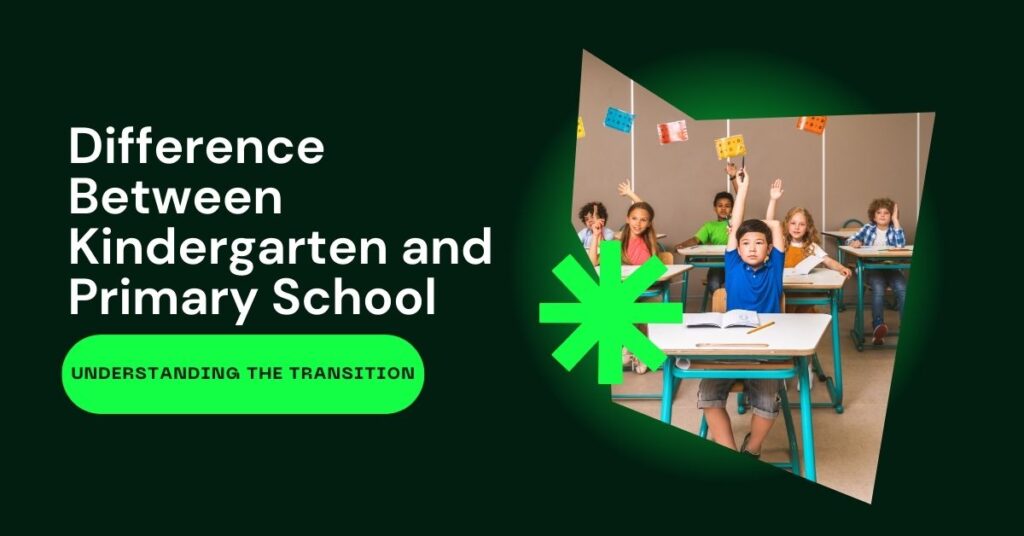
Difference Between Kindergarten and Primary School: A Parent’s Complete Transition Guide
Transitioning from Kindergarten to Primary School: What Parents Need to Know
Now that your child is no longer an infant, it’s time to help them transition into higher academics. When a child moves from kindergarten to primary school, the shift is more than just a change in the classroom.
The change involves new routines, responsibilities, and learning approaches. It marks the beginning of structured learning, developing independence, and stepping into formal academics.
That’s why parents often wonder about the difference between kindergarten and primary school. What really changes beyond Grade 1? How does the environment differ, and will their child be ready for this milestone?
This blog clearly breaks down everything you need to know about kindergarten vs Grade 1, so you understand what to expect during this early school transition.
What Is Kindergarten? Meaning, Purpose & Early Learning Goals
During the early school transition, kindergarten serves as the bridge between preschool and formal academics. It focuses on holistic development, like social skills, communication, emotional expression, early literacy, and foundational numeracy.
Hence, children spend time learning with the help of structured play, storytelling, art, music, and guided group activities.
Between the kindergarten curriculum and primary, the former’s purpose is not academic pressure. Instead, it strives to develop curiosity, motor skills, friendships, and essential classroom habits.
Also Read: Difference Between Nursery and Kindergarten: A Helpful Guide for Parents
What Is Primary School? Academic Structure & Grade 1 Expectations
If your child is starting primary school, it marks the beginning of formal education. This is where concepts become more structured, measurable, and academic-focused.
The curriculum also starts including subjects like Mathematics, Language, EVS/Science, Social Studies, and later expands with computer studies and other disciplines.
Child readiness for school is determined by the way they start handling their homework, assessments, and responsibilities more independently.
Also Read: Developing Social Skills in Preschool Kids: Tips and Activities
Kindergarten vs Primary School (Grade 1): Key Differences Parents Must Know
Here’s a closer look at the difference between kindergarten and primary school:
1. Goal of Education: Play-Based Learning vs Academic Development
The goal of kindergarten vs Grade 1 is how the former creates a strong foundation for learning by exploring and playing.
Children are encouraged to develop social, emotional, and cognitive skills in an environment that feels safe and enjoyable. Even the activities are designed to develop curiosity, imagination, and early communication skills without imposing strict academic pressure.
Primary school, on the other hand, focuses on formal education. Children in Grade 1 are introduced to structured subjects such as Mathematics, Language, Science, and Social Studies.
The goal is to build academic skills, critical thinking, and independence while also preparing children for higher grades.
2. Learning Approach: Play-Based Learning vs Structured Curriculum
In kindergarten, learning is primarily experiential. Children engage in interactive play, storytelling, songs, and hands-on activities. This helps them understand basic concepts in a fun and natural way.
However, when they’re starting primary school, the learning approach becomes more structured and curriculum-driven. Lessons are subject-based, and children are expected to follow instructions, complete assignments, and participate in evaluations.
Playful activities are still included; however, the focus shifts toward measurable academic outcomes.
3. Curriculum Differences Between Kindergarten and Primary School
The difference in kindergarten curriculum vs primary is how the former is designed around early learning and child readiness for school. The latter builds on these foundations with formal instruction.
Thus, kindergarten introduces pre-literacy and numeracy, shapes, colours, and basic problem-solving through play. The emphasis is on experiential learning and developing social-emotional skills rather than formal assessment.
In contrast, children learn reading and writing, mathematics concepts, science and social studies, and begin working on comprehension, projects, and assignments in the primary school curriculum.
This setting is more structured, sequential, and tries to strengthen knowledge and skills for future academic success.
4. Classroom Environment: Activity-Based vs Desk-Oriented Learning
Kindergarten classrooms are lively, colourful, and movement-friendly. They are designed to encourage exploration, collaboration, and creativity. Thus, the focus is on making children feel comfortable, supported, and engaged while learning by playing.
But, after the early school transition into primary school, the classrooms become more organised and desk-oriented. Children are encouraged to develop routines, manage their own materials, and work independently.
Of course, the environment remains supportive; however, it also prioritises focus, discipline, and academic engagement.
5. Assessment & Feedback: Observation-Based vs Formal Evaluation
Child readiness for school is evaluated in kindergarten. The assessment is informal and observation-based. Teachers track development based on children’s participation, activities, and social interaction rather than traditional tests.
Also, feedback is offered for the sole purpose of guiding growth and highlighting strengths and areas for improvement.
In primary school, however, the assessments are more formal. Children need to complete written tests, homework, and projects. These provide measurable feedback on their academic progress.
This evaluation system helps to identify learning needs and prepare children for higher education stages.
6. Independence & Responsibility: Guided Support vs Self-Management
At their elementary school age, children usually rely on adults for guidance, support, and reminders throughout the day. That’s because they’re gradually learning routines, social skills, and basic self-management, which form the foundation for independence.
After starting primary school, children gradually take responsibility for their learning and personal organisation. They manage their own homework, prepare for assessments, and follow structured schedules.
This stage encourages self-discipline, accountability, and confidence in handling tasks independently!
Also Read: Difference Between Preschool and Kindergarten: Which One Is Best for Your Child?
Signs Your Child Is Ready for Primary School (Grade 1 Readiness Checklist)
Parents often worry about their child’s readiness for school while planning the transition from kindergarten to Grade 1. So, here are the signs that your child is prepared for starting primary school:
- They understand basic instructions
- They can sit through short learning sessions
- They recognise letters, numbers, shapes
- They can interact socially with peers
- They show curiosity and willingness to learn
- They have begun reading and writing small words (optional, not mandatory)
- They can handle simple self-care routines
Also Read: 12 Tips For Preparing Your Child For A School Interview
Tips to Make the Kindergarten to Primary School Transition Smooth
Even if your child is ready for primary school, kindergarten vs primary school will have a significant impact on their lives. Here’s how you can make this early school transition easier and more comfortable:
- Talk positively about school to build excitement
- Practice reading & small writing tasks at home
- Build a routine for wake-up, meals, study & play
- Encourage independence in packing bags, organising things
- Communicate regularly with teachers
- Celebrate small achievements to boost confidence
Also Read: How to Prepare Your Child For the First Day of School?
Final Thoughts: Making the Kindergarten to Primary School Transition Smooth
Thus, the difference between kindergarten and primary school is quite a handful. Hence, the transition can feel overwhelming and daunting.
That’s because kindergarten encourages curiosity, social-emotional skills, and foundational learning, while primary school builds structured academics, independence, and responsibility.
But the transition of kindergarten vs Grade 1 can be made smoother if parents help their children through this change.
Admissions are now open at JBM Smart Start for 2026-27! Explore a preschool that prioritises your child’s growth, development, and success. Enrol now!
Frequently Asked Questions About Kindergarten vs Primary School
Q1: What is the main difference between kindergarten and primary school?
Ans: Kindergarten focuses on early development and play-based learning, while primary school emphasises formal academics, structured lessons, and independent work.
Q2: At what age do children typically start Grade 1?
Ans: Most children begin primary school around the age of six. However, the exact age depends on individual school policies.
Q3: Does my child need to read or write before starting primary school?
Ans: Basic familiarity with letters and numbers is expected from an elementary school age. However, primary schools are designed to guide children through reading and writing skills gradually.
Q4: How can parents support children during the early school transition?
Ans: Parents can establish routines, encourage small learning tasks at home, and develop independence in daily activities to help with early school transition.
Q5: Will the transition from kindergarten to primary school be stressful?
Ans: Some children may feel nervous initially. But with supportive teachers, familiar routines, and parental encouragement, most adjust quickly and enjoy the new learning experience!